Thai Engineering & Services designs and supplies custom-built Unit Substations that integrate medium-voltage switchgear, a power transformer, and a low-voltage main switchboard into one coordinated power-distribution solution.
Each system is engineered according to the customer’s electrical load, incoming voltage, distribution requirements, installation environment, protection philosophy, and operating conditions. The integrated design reduces site-installation time, minimizes the required footprint, and ensures effective coordination between the medium-voltage, transformer, and low-voltage sections
MAIN SYSTEM COMPONENTS
- Medium-Voltage Switchgear or Ring Main Unit
- Dry-Type or Oil-Immersed Power Transformer
- Low-Voltage Main Switchboard or Main Distribution Board
- Protection Relays and Circuit-Breaker Control
- Electrical Metering and Power-Quality Monitoring
- Automatic Power Factor Correction
- Control, Alarm, and Annunciation Systems
- Communication and Remote-Monitoring Interfaces
- Internal Lighting, Ventilation, and Temperature Monitoring
- Earthing and Lightning-Protection Systems
- Cable-Entry, Termination, and Support Systems
- Fire Detection and Safety Interlocking, where required
Our Unit Substations can be customized in terms of voltage level, transformer capacity, short-circuit withstand rating, protection scheme, enclosure dimensions, ingress protection, cooling arrangement, internal separation, cable-entry configuration, and communication system.
The equipment can be factory-assembled, wired, inspected, and tested before delivery, reducing onsite construction work and supporting faster installation and commissioning. Available testing includes mechanical inspection, insulation-resistance testing, control-circuit verification, protection-relay testing, interlock testing, functional testing, and communication checks.
Unit Substations are suitable for industrial plants, manufacturing facilities, commercial buildings, infrastructure projects, utilities, pumping stations, renewable-energy projects, data centres, and other facilities requiring safe and reliable medium-to-low-voltage power distribution.
Designed in accordance with applicable IEC standards, local regulations, utility requirements, and project specifications, our Unit Substations provide a compact, reliable, maintainable, and costeffective solution for modern electrical distribution systems.
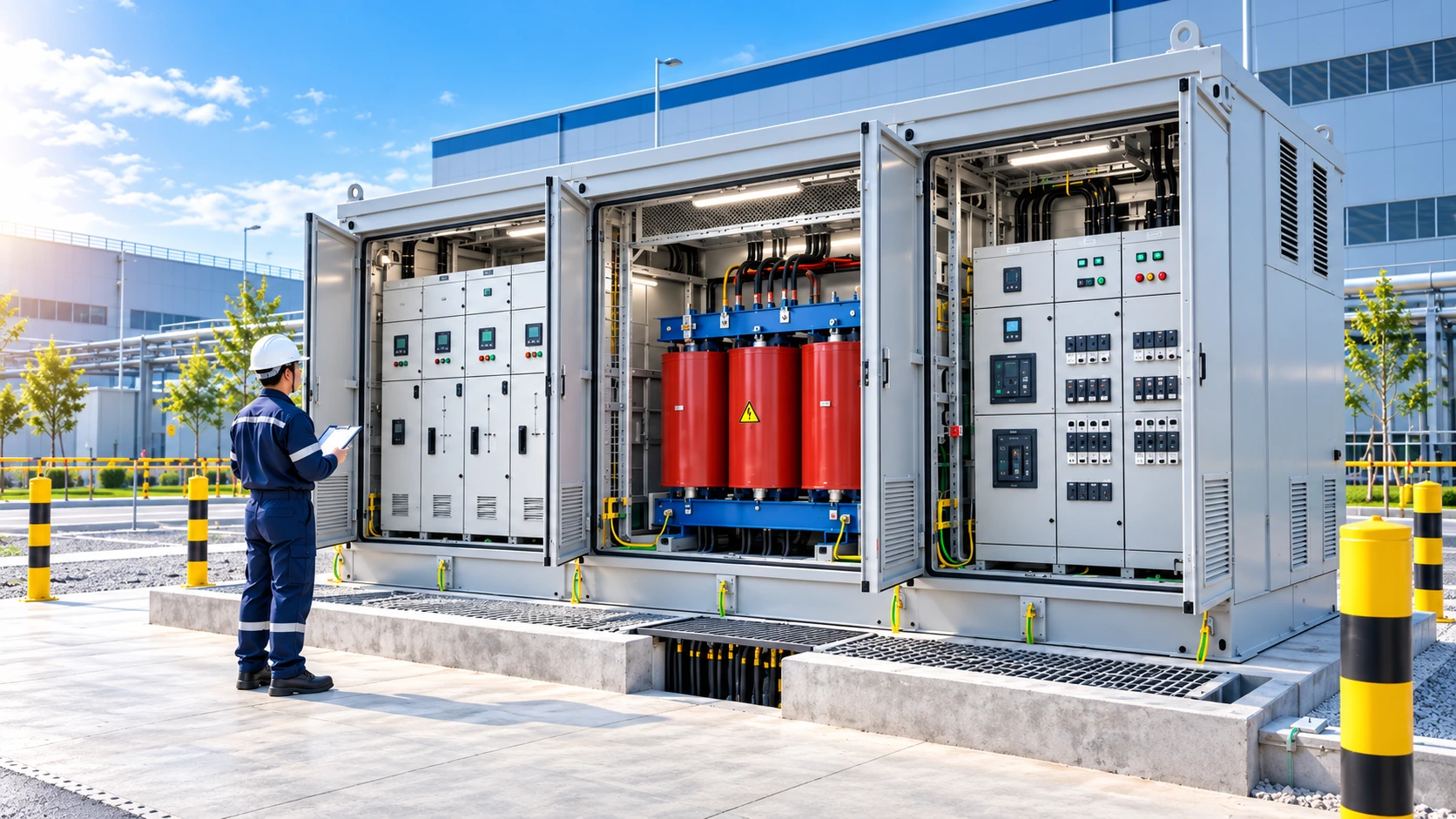
DESIGN, FABRICATION & TEST STANDARDS
Our Unit Substations are engineered, manufactured, assembled and tested in accordance with the latest applicable international standards, project specifications and local utility requirements.
Applicable Standards
- IEC 62271-202 High-voltage/low-voltage prefabricated substations.
- IEC 62271-1 and IEC 62271-200 High-voltage switchgear and metal-enclosed switchgear and controlgear.
- IEC 60076 Series Power transformers, including dielectric performance, temperature rise, short-circuit withstand and routine testing.
- IEC 60076-11 Dry-type power transformers, where applicable.
- IEC 61439-1 and IEC 61439-2 Low-voltage switchgear and controlgear assemblies.
- IEC 60529 Degrees of protection provided by enclosures (IP Code).
- IEC 62262 Protection provided by enclosures against external mechanical impacts (IK Code).
DESIGN AND TYPE VERIFICATION
The Unit Substation and its major components are designed and verified for:
- Rated voltage, current, frequency and short-circuit level
- Dielectric withstand and insulation coordination
- Temperature-rise limits under rated operating conditions
- Short-time and peak withstand current
- Internal arc classification, when specified
- Mechanical operation and safety interlocking
- Enclosure protection, ventilation and environmental conditions
- Electrical clearances, creepage distances and accessibility
- Earthing and bonding continuity
- Transformer losses, impedance and thermal performance
- Structural strength and mechanical impact protection
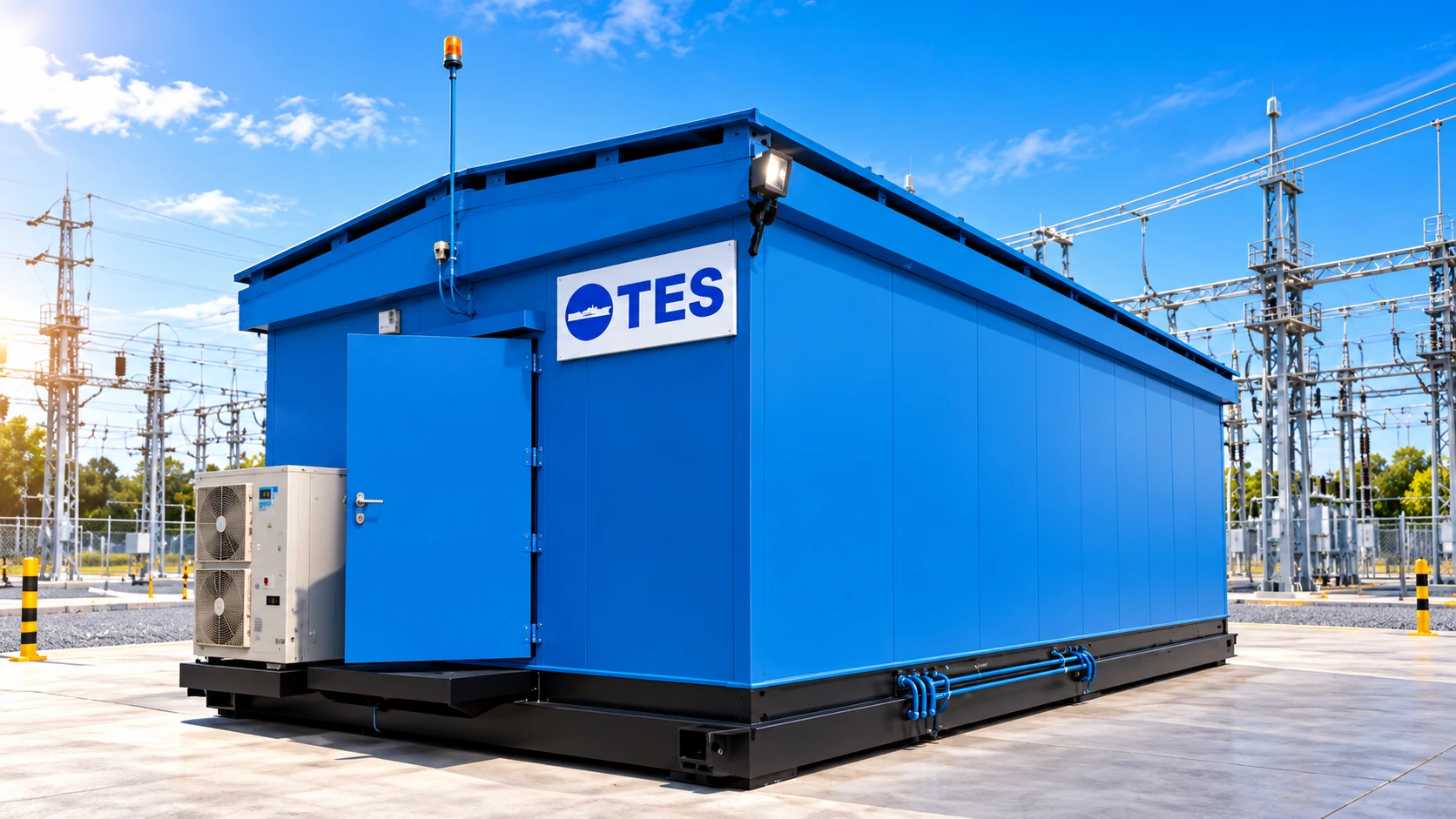
FACTORY ACCEPTANCE TEST
Each Unit Substation undergoes inspection and routine testing before delivery. The testing scope may include:
- Visual, dimensional and nameplate inspection
- Verification of equipment ratings and approved drawings
- Main-circuit and protective-earthing continuity tests
- Insulation-resistance and dielectric-withstand tests
- Control wiring and point-to-point continuity checks
- Circuit-breaker operation and mechanical interlock tests
- Protection-relay setting and secondary-injection tests
- CT and VT ratio, polarity and wiring verification
- Metering, alarm, indication and trip-function tests
- Communication and SCADA interface tests, where applicable
- Transformer routine tests, including winding resistance, voltage ratio, vector group, impedance and dielectric tests
- Functional testing of the complete MV, transformer and LV system
- Factory Acceptance Test documentation and test reports
SITE TESTING AND COMMISSIONING
Following installation, site testing and commissioning can be performed to confirm the complete system’s safety and operational readiness, including:
- Inspection of installation, cable termination and earthing
- Insulation-resistance and cable-continuity tests
- Phase-sequence and voltage verification
- Protection-relay testing and coordination confirmation
- Functional tests of alarms, trips and interlocks
- Communication and system-integration tests
- Energization, no-load and operational performance checks
Testing requirements can be customized to meet project specifications, utility regulations and customer requirements. Independent inspection or third-party certification can also be provided upon request.